UFC & MMA Blog · Investigations
Can Ian Machado Garry decision his way to Makhachev's belt?
Ian Machado Garry enters UFC 330 on six straight decisions. Our sweep of every UFC title fight shows challengers like him almost never win the belt.
- Author
- Mate Bersenadze
- Published
- Aug 12, 2026
- Read time
- 6 min read
- Tags
- UFCUFC 330Ian Machado GarryIslam MakhachevOddsData
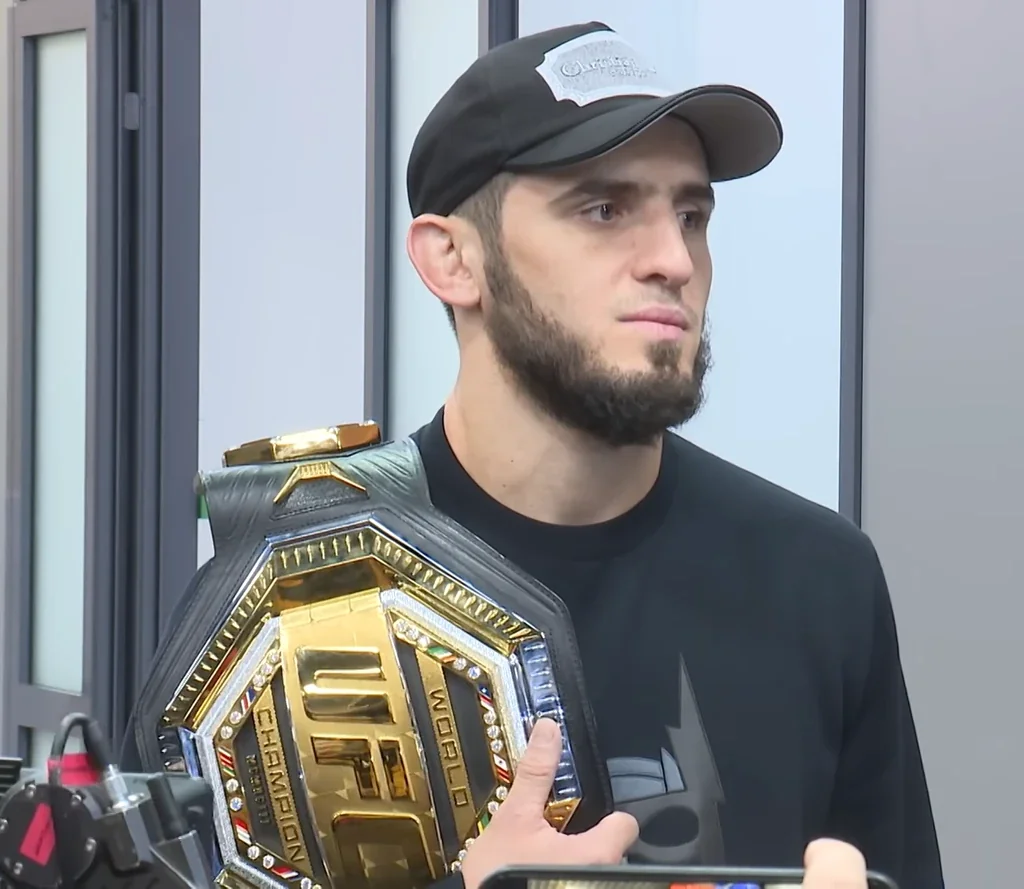
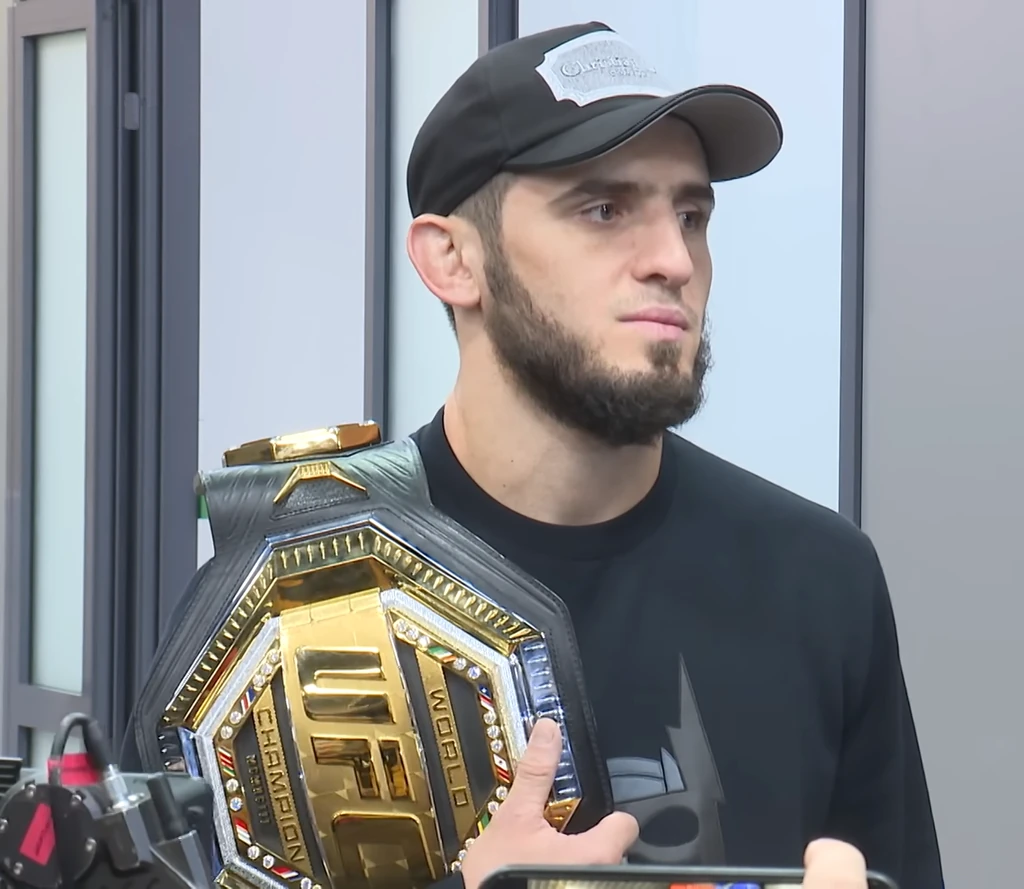
Photo: Новости ННТ / CC BY 3.0

On Saturday at UFC 330, Ian Machado Garry gets the welterweight title shot he has been talking his way toward for three years. He arrives with a 17-1 record, a win over the former champion, and a problem nobody in his camp wants to name: he has not finished an opponent since May 13, 2023. By fight night that will be 1,190 days. Six straight fights, six decisions.
Let me get my bias out of the way first. I like watching Garry work. The jab-and-angles game he showed against Belal Muhammad in November was some of the cleanest point-fighting the division has produced, and going 25 minutes with Shavkat Rakhmonov and losing only on the cards is nothing to apologize for. This is not a piece about whether Garry is good. It is a piece about what happens, historically, to challengers who show up to a title fight the way he is showing up to this one.
So I pulled every completed UFC title fight in our database and asked one question about each challenger: how many consecutive fights ending in a decision were they riding when they stepped into the cage?
The cohort
Seventeen challengers have entered a UFC title fight on four or more consecutive decision results. Here is the complete list, and how each night ended.
| Challenger | Title fight | Decisions entering | Result |
|---|---|---|---|
| Gray Maynard | UFC 136, Oct 2011 | 8 | Lost, KO |
| Katlyn Cerminara | UFC 247, Feb 2020 | 8 | Lost, TKO |
| Gray Maynard | UFC 125, Jan 2011 | 7 | Split draw |
| Jessica Eye | UFC 238, Jun 2019 | 7 | Lost, KO |
| Liz Carmouche | UFC Fight Night, Aug 2019 | 7 | Lost, decision |
| Petr Yan | UFC 323, Dec 2025 | 7 | Won, decision |
| Max Holloway | UFC 276, Jul 2022 | 6 | Lost, decision |
| Demetrious Johnson | UFC 152, Sep 2012 | 5 | Won, split decision |
| Colby Covington | UFC 245, Dec 2019 | 5 | Lost, TKO |
| Manon Fiorot | UFC 315, May 2025 | 5 | Lost, decision |
| Tim Sylvia | UFC 81, Feb 2008 | 4 | Lost, submission |
| Quinton Jackson | UFC 135, Sep 2011 | 4 | Lost, submission |
| Miesha Tate | UFC 196, Mar 2016 | 4 | Won, submission |
| Henry Cejudo | UFC 197, Apr 2016 | 4 | Lost, TKO |
| Ray Borg | UFC 216, Oct 2017 | 4 | Lost, submission |
| Joanna Jedrzejczyk | UFC 248, Mar 2020 | 4 | Lost, split decision |
| Leon Edwards | UFC 278, Aug 2022 | 4 | Won, KO |
Four wins, twelve losses, one draw. That is a 23.5 percent success rate.
For context: across the whole ledger, 488 challengers have walked into UFC title fights, and 185 of them won. That is 37.9 percent. Show up on a decision streak and your odds drop by more than a third.
And it gets worse the deeper the streak goes. Garry's streak is six. Seven challengers have entered on six or more consecutive decisions. One of them left with the belt.
The exception is not comforting
That one winner is Petr Yan, eight months ago at UFC 323, riding seven straight decision results into the rematch with Merab Dvalishvili. On the surface that is the Garry blueprint. Look closer and it is not.
Yan was a former champion who had already finished title-level bantamweights before his decision run started. His streak was a stylistic adjustment in the deepest division in the sport, not a career-long pattern. Garry has three knockouts in eleven UFC fights, all against unranked opponents, and has never finished anyone with a number next to their name.
The other three winners offer even less comfort, because two of them won by doing the thing they supposedly could not do. Miesha Tate entered UFC 196 on four straight decisions and choked Holly Holm unconscious in the fifth round. Leon Edwards entered UFC 278 on four straight decisions, lost four rounds to Kamaru Usman, and then landed the most famous head kick of the decade. The decision merchants who won mostly stopped being decision merchants for one night. Only Yan and Demetrious Johnson actually decisioned their way to gold, and Johnson needed a split card to do it against Joe Benavidez for a vacant belt.
There is a size footnote here too. Yan, Johnson and Tate all did it in the sport's smaller divisions, where the scorecards are simply part of the furniture: flyweight and bantamweight fights in our ledger end in a decision about 54 percent of the time, against 47.4 percent at welterweight. The only one who pulled this off at Garry's weight was Edwards, and he needed the head kick to do it.
The losses are not close
The other pattern in that table is uglier. Of the thirteen challengers who failed, eight did not hear the final bell. Maynard, knocked out. Cerminara, stopped. Eye, head-kicked into the highlight reel. Covington, broken in the fifth. Sylvia, Jackson, Borg, submitted. Cejudo, stopped in the first.
There is a logic to it. A challenger who cannot finish concedes every exchange of risk. The champion knows the worst realistic outcome of any single moment is losing a round, so the champion can afford to commit. The challenger cannot make anyone pay for committing. Over 25 minutes, that asymmetry compounds, and it tends to compound suddenly.
An aside the table undersells: four of those thirteen failures, Eye, Carmouche, Cerminara and Fiorot, were fed to Valentina Shevchenko. Matchmaking a low-finish challenger against a great champion is apparently a renewable resource.
The man across the cage
Now put Islam Makhachev on the other side of this math. He is 28-1. He has won six straight title fights, four by finish. In his lightweight title run he submitted Charles Oliveira, Dustin Poirier and Renato Moicano and knocked out Alexander Volkanovski in one round. When he moved up and took the welterweight belt from Jack Della Maddalena in November, he did it the boring way, five rounds of control, which for him counts as a slow night.
The books have absorbed all of this. Across the sportsbooks we track, Makhachev sits around -340, roughly a 77 percent implied favorite, with Garry back around +270. The market is not pricing a coin flip between an elite champion and an elite challenger. It is pricing exactly what the table above prices: challengers built like Garry do not usually get to keep the night's biggest promise.
None of this says Garry loses on Saturday. Edwards is in that table precisely because history is a tendency, not a law, and Garry is a better athlete than most of the seventeen. But if he wins, the overwhelming likelihood is that he does it on scorecards, three judges, 25 minutes, zero margin for a single bad exchange against the most suffocating fighter of his era. Nobody in UFC history has pulled that off as a first-time challenger on a streak this long.
Garry keeps saying he sees things in Makhachev nobody else sees. On Saturday we find out if one of them is the final bell.