Gable Steveson was a 16-to-1 favorite and lasted twelve seconds
Gable Steveson closed at minus-1636 and Sean Sharaf knocked him out in twelve seconds at UFC 331. What the price, our numbers and his purse all got wrong.
Twelve seconds. One landed strike. A man who won an Olympic gold medal in Tokyo, who the sportsbooks had priced at better than 16-to-1 on Saturday night, spent less time in the cage at UFC 331 than it takes to read this paragraph out loud.
Sean Sharaf walked across the cage and knocked Gable Steveson out at 0:12 of the first round. It is the shortest main card fight of 2026. Sharaf was 1-2 in the UFC and had been stopped in each of his previous two fights. The market had him at roughly plus-885 at the close, our model gave him 16.2 percent, and I wrote a piece three days beforehand arguing that his price was one of the strangest numbers on the card.
It was not strange. It was wrong, and so was I, and the interesting part is why everyone was wrong in the same direction.
What the number actually said
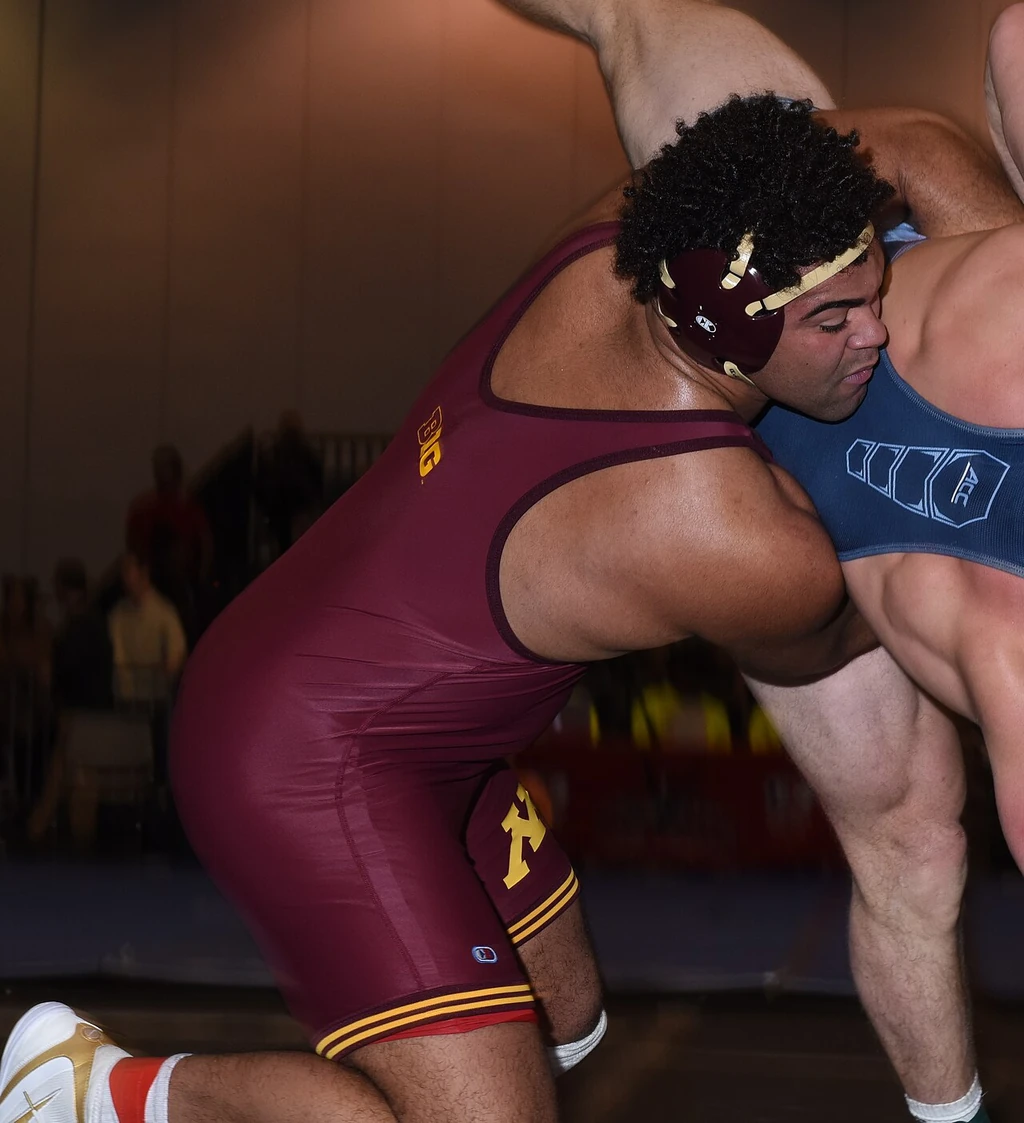 Photo: Chris Hunkeler from Carlsbad, California, USA / CC BY-SA 2.0
_2018.jpg)
Across the 24 sportsbooks we track, Steveson closed at an average of minus-1636. That is an implied 94 percent, and it is the kind of line you normally see next to a returning champion or a debuting prospect being fed a late replacement. Sharaf was neither. He was a heavyweight with three UFC fights, two knockout losses, and a Fight of the Night award from one of the nights he lost.
Nothing in that record says 6 percent. A heavyweight with hands and a pulse is never 6 percent, because heavyweight is the division where the worst fighter on the roster can end the best one's night with a single connection, and everybody who writes about this sport knows that and prices it in anyway.
The line was not built on Sharaf's record. It was built on Steveson's resume, and his resume is from a different sport. He beat Geno Petriashvili 10-8 for gold at the Tokyo Games with a takedown as time expired, won two NCAA titles at Minnesota on 17-0 seasons, and took four Big Ten heavyweight titles, all of it listed on his fighter page. Even that record has a closing-seconds loss in it: Wyatt Hendrickson beat him in the 2025 NCAA final with the match almost over. He then signed with the WWE, came back, and has now had two professional MMA fights: a first-round knockout win at UFC 329 in July, and this.
Two fights is not a sample. The market treated one of them as a sample and the amateur career as the rest of the evidence, and our own numbers did exactly the same thing, which is the uncomfortable part of writing this. Our model gave him 83.8 percent, its highest confidence on the entire card, off a feature set that reads pedigree and a single professional result and has almost nothing else to read.
The pay tells you what the promotion believed too
The California State Athletic Commission disclosed the purses for this card. Steveson was paid $160,000 to show. Sharaf was paid $30,000 to show and $30,000 to win.
Set that beside the records: Steveson at 1-1 in the UFC, Sharaf at 1-2 and now 2-2. The man who was knocked out was paid more than five times the man who did the knocking out, before the $25,000 finish incentive closed some of the gap. The promotion was not paying for either man's results. It was paying for a gold medal, which is a perfectly rational thing for a business built on attention to do, and a completely irrational basis for anybody else to price a fight on.
This is the structural version of the same error the betting market made. Fame is the input everybody can see, so fame is the input that gets weighted, and the actual predictive information at heavyweight, which is who can take a shot and who cannot, does not appear on a resume at all. Steveson has now been in the cage for 163 seconds as a professional across two fights. Nobody knows whether he can take a punch, including the people who priced him at 94 percent.
What we do about it
There is an honest correction available here and it is not "stop trusting the model". Our numbers got seven of twelve picks right on the night, which is ordinary, and were beaten badly on exactly one fight, which is also ordinary. The correction is narrower and it applies to humans as much as to any rating system.
When a fighter's fame arrived before his professional record did, and the record is under five fights, the price is a story about the past, not a forecast. Steveson at minus-1636 with two pro fights. Robelis Despaigne arrived on the same logic in 2024, an Olympic taekwondo bronze medalist with a handful of professional fights and an 18-second knockout on his UFC 299 debut, and then lost the next two by decision to men who simply survived the opening round. Heavyweight keeps teaching this lesson and the market keeps paying the tuition.
I do not think Steveson is finished, and it would be stupid to write him off on twelve seconds, exactly as stupid as it was to make him a 94 percent favorite on one win. He is 26. He has the best wrestling credential in the division and the least evidence of anyone in it. Both of those things were true on Saturday morning and both are true now.
The difference is that the next time he fights, the number next to his name will be built on three professional fights instead of two, and one of them will be the twelve seconds. That is not a knock on him. That is the only honest way anybody has ever learned anything about a heavyweight.