Joshua Van vs Pantoja 2: how volume beat 9:11 of control
Joshua Van beat Alexandre Pantoja at UFC 331 despite conceding five takedowns and 9:11 of control. The round-by-round numbers show how he did it, and why.
Nine minutes and eleven seconds. That is how long Alexandre Pantoja held Joshua Van down or pinned to the fence at UFC 331 on Saturday, out of 25 minutes of fighting. He landed five takedowns from eighteen attempts. He lost 49-46, 50-45, 48-47.
Ten months earlier the same two men needed one round, and Van knocked him out. So the rematch was supposed to be the corrective: the 36 year old former champion takes the 24 year old somewhere the 24 year old has never had to live, and makes him spend a quarter of an hour there. Pantoja did exactly that and it did not work, and the reason it did not work is the most instructive thing on the card.
The grappling was real. The scoring was somewhere else
Take the rounds one at a time, because the shape of this fight is entirely in the round splits.
Round one. Pantoja lands 27 of 45 significant strikes, hits two takedowns from three attempts, and controls 2:25. Van lands 13 of 27. That is Pantoja's round on any card in the building.
Round two. Van 37 of 64, Pantoja 32 of 76, one takedown from five attempts, 1:31 of control. Close, and already the attempt count is climbing while the success rate falls.
Round three. Van 65 of 98. Sixty-five significant strikes in five minutes, against a man who spent 1:17 of that round controlling him. Pantoja answers with 36 of 71.
Round four. Pantoja's best round of the night by every grappling measure: 3:58 of control, one more takedown, and Van reduced to 14 of 28. Pantoja throws 22 significant strikes in the entire round and lands 14 of them.
Round five. Van 52 of 88, and a knockdown. Pantoja controls nothing, zero seconds, and goes 0 for 2 on takedowns.
Now look at what that adds up to. Van out-landed him 181 to 147 on significant strikes at 59 percent accuracy to 52 percent, scored the only knockdown of the fight, and never attempted a takedown of his own. Not one. He fought the entire 25 minutes with a takedown attempt count of zero and won three rounds on all three cards.
Control time is not a scoring criterion, it is a cost
Here is the mechanical piece, and it is the one that generalizes past this fight.
Pantoja's route to winning rounds requires him to convert position into damage or a submission threat before the fence resets. His career takedown accuracy is 44 percent and he averages 2.82 landed per fifteen minutes, which is a real grappler's number. On Saturday he went 5 for 18, which is 28 percent, and the thirteen misses are the story the control time hides. A failed level change against the cage costs you the same thirty seconds a successful one buys, except you spend it in the worse position and you spend the gas.
Watch round four again, the round he won cleanly. He controlled almost four full minutes and landed fourteen significant strikes. Round three, which he lost, he threw more than three times as many. The round where the grappling worked is the round where the offense stopped, and there is no judge alive who scores 3:58 of control and 14 strikes over 65 landed strikes without looking uncomfortable doing it. Derek Cleary had this fight 48-47, so somebody did look uncomfortable.
What Van actually does, and why it travels
Van's career numbers say this plainly: 8.26 significant strikes landed per minute, 57 percent accuracy, 75 percent takedown defense. That output number is absurd for a flyweight and it is the whole architecture of his game. He is not a counter-puncher waiting for the grappler to commit, he is a volume machine whose defense against wrestling is arithmetic. Get taken down, get up, and make sure the minute after the scramble carries more offense than the minute inside it did.
He also never chases the takedown back. That zero on his takedown attempt line is a decision, not an oversight. A man who wrestles with Pantoja spends his own energy on the one exchange Pantoja is best at, and Van at 24 with that engine has no reason to trade in the currency where the 36 year old is richer.
The first fight, at UFC 323 in December, is the counterweight. Van landed 2 of 4 significant strikes in that one, Pantoja landed 6 of 11, and then it was over inside the round. On the numbers Pantoja was winning the fight he lost. That is why the rematch mattered and why a five-round decision, with the champion out-working him in rounds three and five, settles something a one-round knockout did not.
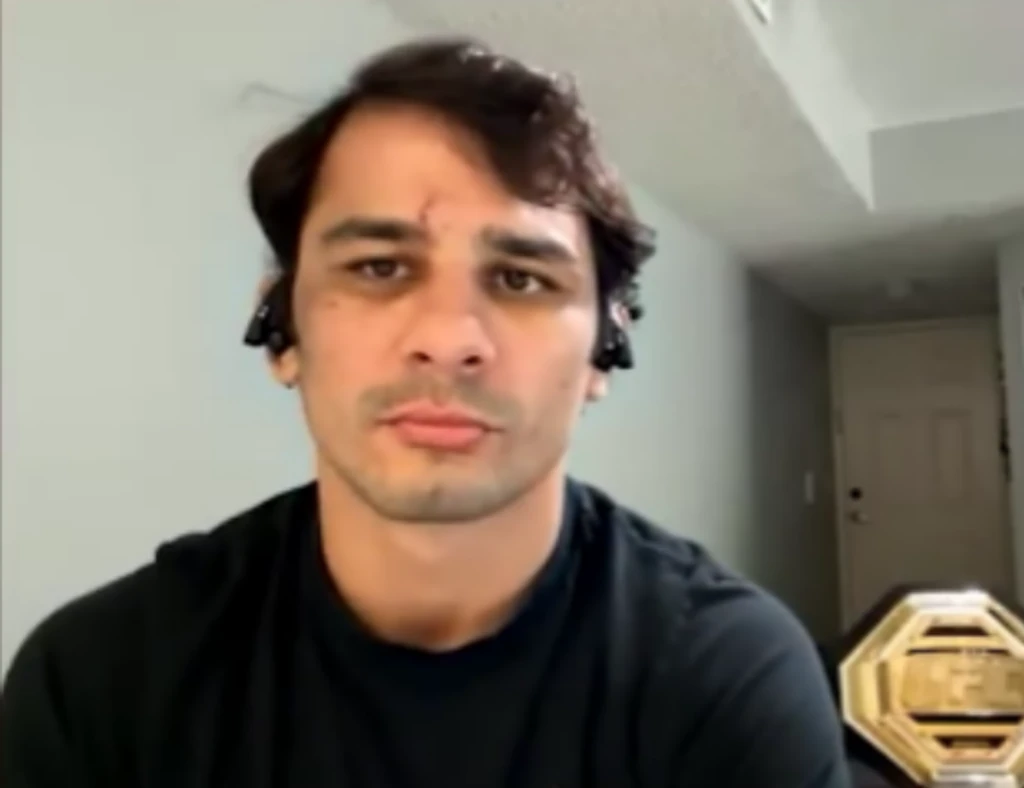
Photo: Sexto Round / CC BY 3.0

The fix, if there is one
I do not think Pantoja fought this badly. I think he fought it exactly as designed and the design is out of date against this particular opponent, which is a harsher verdict than a bad night.
If there is a third fight, the adjustment is not more takedown attempts, it is fewer and better ones. Eighteen entries produced five landings and thirteen resets, and every reset gave Van a free half-minute of open space, which is the only place on earth Van needs. Pantoja's 69 percent career takedown defense and his submission game are still the best assets in that division below the champion. They just have to arrive inside a round where he also throws more than 22 strikes.
It was a Fight of the Night, Herb Dean refereed it, and the wider point is one the sport keeps relearning: the judges are watching the offense, and control time only pays when it buys some.
Full stats, scorecards and the round-by-round are on the UFC 331 event page, and the flyweight board is at our rankings.