Hernandez vs Rodrigues: our model's picks and two parlays
UFC Sacramento predictions: our model's win probabilities for Hernandez vs Rodrigues, where it disagrees with the odds, and the two parlays it backs.
- Author
- Mate Bersenadze
- Published
- Aug 22, 2026
- Read time
- 8 min read
- Tags
- UFCUFC Fight NightAnthony HernandezGregory RodriguesJamall EmmersOdds
Our model thinks the books are wrong about Lerryan Douglas, and it is not close. The market makes him a 76 percent favorite over Jamall Emmers on tonight's prelims. Our model gives him 58. That is an eighteen point gap on a fight most of the internet will spend zero seconds on, and it exists for a deeply boring reason: Douglas has spent three and a half minutes inside a UFC cage, total, and our model does not know how to be confident about a man it has barely seen.
The card is at Golden 1 Center in Sacramento. Prelims start at 5pm ET, the main card follows at 8pm ET, Paramount+ carries it in the US, and the country by country list is on the how to watch page. Anthony Hernandez and Gregory Rodrigues headline at middleweight, which is a better main event than a Saturday in August has any right to expect.
What follows is what our fight-prediction model made of all thirteen fights, where it disagrees with the sportsbooks, and the two tickets it backs. It is a model opinion, not betting advice, and you should be 18 or older to care. Every number below comes from our own database, priced against consensus odds from 25 books as of 6pm UTC today. Lines move until the walkouts.
The favorites: four legs at 9.13x
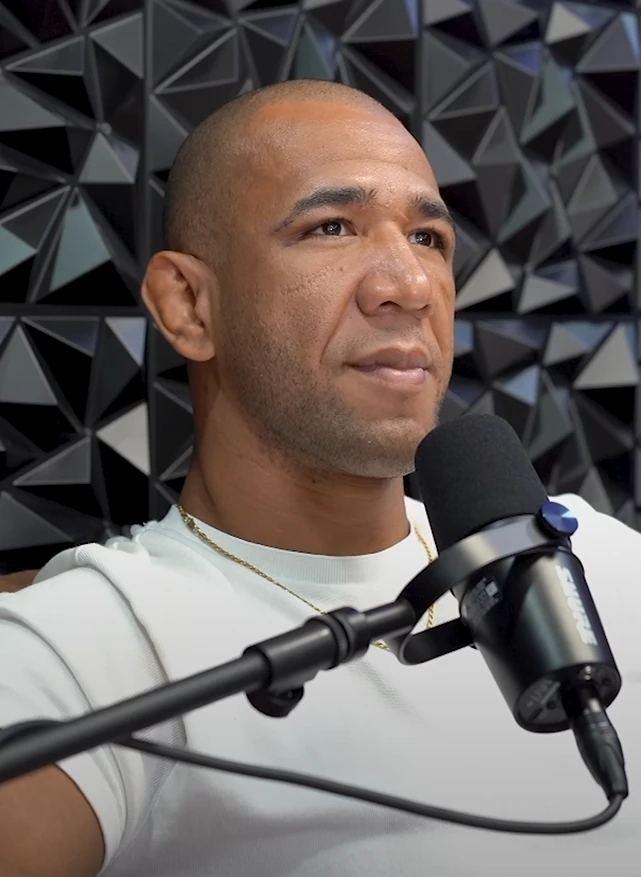 Photo: Show Me The Money / CC BY 3.0
The spine is Hernandez (15-3, 1 NC) at -210, and it is the one leg where the model has no argument with anybody. It makes him 64.8 percent. The market says 65.5. When the two agree that precisely you are not buying an edge, you are buying a floor.
The case is legible enough. Hernandez lands 5.9 takedowns per fifteen minutes against a man who lands 1.9, and he has submitted Roman Kopylov and Roman Dolidze inside the last two years. The case against is equally legible, and the model can see it too: Rodrigues (19-6) owns eight knockout wins to Hernandez's two and has taken the opening round on the scorecards in 75 percent of his fights. This is a bet that Hernandez gets through five minutes of a very heavy-handed man and turns the thing into wrestling. The books have moved it from -141 to -210 since it opened two weeks ago, so the money agrees.
The two legs that actually pay for themselves are further down the card. Kennedy Nzechukwu (14-6-1) is +106 against Shamil Gaziev (14-3), and our model makes him a 58 percent favorite in a fight the market prices at 47. Gaziev is 36, has lost two straight by knockout, and absorbs 5.16 significant strikes a minute while landing 3.01, which is the statistical shape of a heavyweight coming apart. Nzechukwu gives up nothing in size, carries five inches of reach and defends 81.5 percent of takedowns against a man who completes 33 percent of his own. I will state the caveat rather than let you find it: Nzechukwu has not had his own hand raised since December 2024, and the model does not care about that as much as I do.
Chris Padilla (17-6-1) at -115 is the cheapest disagreement on the card. He is 4-0 in the UFC, and the number I keep coming back to is damage taken: 148 significant strikes absorbed across his entire UFC run, against 1,056 for Nasrat Haqparast. Haqparast is the bigger name with fifteen UFC fights, but he is coming off a first-round knockout loss to Quillan Salkilld, has not fought in ten months, and takes six significant strikes a minute. The model says 57.3 percent. The market says coin flip.
The fourth leg is where I owe you an admission. Gauge Young (11-3) is -165 against debutant Stan Dorsainvil, and our model makes that 76.9 percent against a market at 60.2. That gap is not insight. We hold no fight record for Dorsainvil at all, and a model handed an empty file will quietly treat the unknown man as a bad one. Read the 77 as something closer to the market's 60. I still like Young at -165 on his own merits, because a 26 year old on a three-fight run who has beaten Thiago Moises and Maheshate is a legitimate favorite over anyone making a debut. But the number is flattered, and pretending otherwise would make everything else here worth less.
Four legs, 9.13x, +813. Our model gives the whole thing 16.6 percent.
The underdogs: two legs, also 9.13x
Emmers (22-8) at +304 is the ticket. Douglas (14-5) has one UFC fight, a first-round knockout of Julian Erosa in March, with five straight stoppages behind it on the regional circuit, and the market has priced that as a finished product. Our model has 86.5 minutes of tracked cage time on Emmers and 3.5 on Douglas. It sees a 37 year old with nine UFC fights, two straight wins, 80 percent takedown defense and 4.88 significant strikes landed a minute, and it declines to call him a 24 percent underdog.
The counterweight is real and I am not going to hide it either: Emmers is 37, and age is the single largest factor the model holds against him. If Douglas is what his regional record suggests, this ages badly in about four minutes.
Serghei Spivac (18-6) at +126 is the quiet half. He is sixth at heavyweight on the UFC's rankings and his recent schedule reads Ciryl Gane, Jailton Almeida, Waldo Cortes Acosta, Marcin Tybura and Ante Delija. Vitor Petrino (14-2) has been matched with Steven Asplund, Thomas Petersen and Austen Lane. Petrino is younger, on a three-fight run and genuinely improving, and he was also knocked out by Dustin Jacoby the last time he lost. Our model reads it 45.2 to 54.8 against a market at 42.6 to 57.4, which is the whole argument: on a fight this close, take the side with the harder resume and the plus money.
Two legs, 9.13x, +813, and the model gives it 19 percent, which makes the two-leg underdog ticket the likelier of the two to land. Both tickets are on the event page, where they get graded against the real results after the card.
The seven fights we refused

Photo: ReinierdeRidder / CC BY-SA 4.0

This is the part I actually want you to read, because a model that will price anything is worth nothing.
Four rules govern what we are allowed to bet. Both corners need three or more UFC fights before a leg counts as clean. A fight needs three or more books quoting it, which every fight here cleared with 24 or 25. Any gap over fifteen points between our number and the market's is treated as our ignorance rather than the book's error. And probabilities are clipped to a five to ninety percent range, because the model is not permitted to be more certain than that about a fistfight.
Six of the thirteen fights tripped the thin-data rule. We used two of them anyway, and you just read both warnings in full.
The other seven contributed nothing. Terrance Chatman against Anthony Wint carries the largest model-market gap on the entire card at 23 points, and it is worthless: Chatman is a debutant we hold no record for, so our 34.6 percent is a prior, not a read. Carli Judice against Jeisla Chaves is the second largest at 21 points, and the common opponent chain runs the wrong way for the underdog, since Judice stopped Yuneisy Duben in round one and Chaves needed a split decision over the same woman. Marcio Barbosa at -817 pays 1.12x for the privilege of carrying an opponent with no UFC fights.
Dolidze against Reinier de Ridder and MarQuel Mederos against Mason Jones both die the same quiet death: our model is below the market on the favorite in each, 72.8 against 76.8 and 68.3 against 75.2, so both favorites pay less than they should. The dog sides are live, and neither made it. Dolidze is 38, has lost two straight and defends 32 percent of takedowns against a grappler. Mederos is the more tempting of the two at +288, but Jones is a 95th percentile takedown fighter against a man in the 4th percentile for ground striking, a matchup that has gone 61 percent across 426 historical cases, and the line has moved 71 cents away from Mederos since it opened. Wes Schultz against Jackson McVey is worse than that: our model and the market agree within a point on both sides, which means there is simply nothing to buy.
The math, stated honestly
The favorites ticket pays 9.13x. Our model says all four legs land 16.6 percent of the time, which is worth 6.04x, so we are being paid more than the model thinks the outcome is worth. The market's own prices imply 9.5 percent. The underdog ticket pays the same 9.13x on a model probability of 19 percent, worth 5.26x, against a market implication of 10.2 percent.
One caveat that matters more than any of those numbers: the legs are not independent. These fights share a cage, a night, a set of judges and a referee pool. Treat 16.6 percent and 19 percent as ceilings rather than measurements. Anybody quoting you a combined probability on a same-card parlay without saying that is selling you something.
Both tickets landed under our usual ten times target, at 9.13x apiece, and I want to be specific about why rather than wave at it. Getting the favorites ticket above ten meant either swapping Hernandez for Petrino, the only favorite on this card our model actively dislikes at his price, or bolting on Shanelle Dyer at 1.12x and watching the combined probability fall from 16.6 to 13.7 percent. Getting the underdog ticket there meant Mederos or Dolidze. Every route to a bigger number ran through a leg I had just spent a paragraph explaining why I did not trust. The multiplier is not the product. The refusals are.
Prelims at 5pm ET. I will be wrong about at least two of these.