UFC Sacramento salaries: what Gregory Rodrigues, Reinier de Ridder and every fighter made
Full disclosed UFC Sacramento salaries from the California State Athletic Commission: every fighter's purse, win bonus, post-fight award and total from UFC Fight Night 285, plus how our estimates held up.
- Author
- Mate Bersenadze
- Published
- Aug 23, 2026
- Read time
- 8 min read
- Tags
- Fighter PayBonusesUFCUFC SacramentoGregory RodriguesReinier de RidderAnthony Hernandez
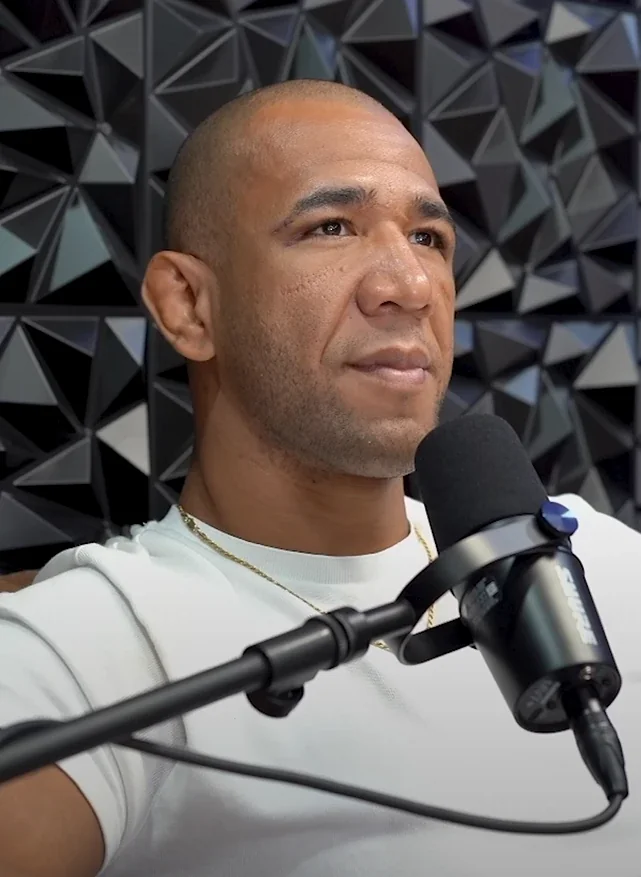
The California State Athletic Commission released the full purse list for UFC Sacramento the same night the cage came down, which makes this one of the few 2026 cards where nobody has to estimate anything. Add the disclosed purses to the post-fight awards and the promotional compliance pay and the card paid out $3,041,000.
Reinier de Ridder led the disclosed purses at $360,000. He did not lead the night. Gregory Rodrigues won the main event, collected a $100,000 Fight of the Night award on top of a $340,000 purse, and finished on $451,000, which is $60,000 clear of anyone else on the card.
We published estimated purses for this card a few hours before the commission list landed. Those estimates are gone from this page and from our payout table, replaced by the real figures. How they did against the real thing is further down, because the answer is not flattering everywhere.
UFC Sacramento disclosed salaries: what every fighter made
Three numbers stack into each total. The disclosed purse is what CSAC published: show money, plus an equal win bonus for the winners. The post-fight bonus is the $100,000 award or the $25,000 finish incentive, which since UFC 324 do not stack. Compliance pay is the promotional-guidelines money every fighter receives by tenure, reported by MMA Junkie and separate from the commission filing.
Main card
| Fighter | Result | Show | Win bonus | Post-fight bonus | Compliance | Total |
|---|---|---|---|---|---|---|
| Gregory Rodrigues | W, UD | $170,000 | $170,000 | $100,000 | $11,000 | $451,000 |
| Anthony Hernandez | L, UD | $170,000 | $0 | $100,000 | $11,000 | $281,000 |
| Vitor Petrino | W, UD | $100,000 | $100,000 | $0 | $6,000 | $206,000 |
| Serghei Spivac | L, UD | $125,000 | $0 | $0 | $16,000 | $141,000 |
| Reinier de Ridder | W, KO/TKO R1 | $180,000 | $180,000 | $25,000 | $6,000 | $391,000 |
| Roman Dolidze | L, KO/TKO R1 | $180,000 | $0 | $0 | $11,000 | $191,000 |
| MarQuel Mederos | W, KO/TKO R2 | $24,000 | $24,000 | $100,000 | $4,500 | $152,500 |
| Mason Jones | L, KO/TKO R2 | $33,000 | $0 | $0 | $6,000 | $39,000 |
| Carli Judice | W, KO/TKO R1 | $28,000 | $28,000 | $100,000 | $4,500 | $160,500 |
| Jeisla Chaves | L, KO/TKO R1 | $12,000 | $0 | $0 | $4,000 | $16,000 |
| Anthony Wint | W, SUB R1 | $10,000 | $10,000 | $25,000 | $4,000 | $49,000 |
| Terrance Chatman | L, SUB R1 | $12,000 | $0 | $0 | $4,000 | $16,000 |
Prelims
| Fighter | Result | Show | Win bonus | Post-fight bonus | Compliance | Total |
|---|---|---|---|---|---|---|
| Jamall Emmers | W, KO/TKO R1 | $63,000 | $63,000 | $25,000 | $6,000 | $157,000 |
| Lerryan Douglas | L, KO/TKO R1 | $12,000 | $0 | $0 | $4,000 | $16,000 |
| Shamil Gaziev | W, KO/TKO R1 | $50,000 | $50,000 | $25,000 | $6,000 | $131,000 |
| Kennedy Nzechukwu | L, KO/TKO R1 | $105,000 | $0 | $0 | $16,000 | $121,000 |
| Chris Padilla | W, SUB R3 | $39,000 | $39,000 | $25,000 | $6,000 | $109,000 |
| Nasrat Haqparast | L, SUB R3 | $90,000 | $0 | $0 | $16,000 | $106,000 |
| Marcio Barbosa | W, KO/TKO R1 | $12,000 | $12,000 | $25,000 | $4,000 | $53,000 |
| Ryan Kuse | L, KO/TKO R1 | $12,000 | $0 | $0 | $4,000 | $16,000 |
| Stan Dorsainvil | W, UD | $12,000 | $12,000 | $0 | $4,000 | $28,000 |
| Gauge Young | L, UD | $16,000 | $0 | $0 | $4,500 | $20,500 |
| Jackson McVey | W, KO/TKO R1 | $25,000 | $25,000 | $25,000 | $4,500 | $79,500 |
| Wes Schultz | L, KO/TKO R1 | $12,000 | $0 | $0 | $4,000 | $16,000 |
| Shanelle Dyer | W, KO/TKO R3 | $12,000 | $12,000 | $25,000 | $4,000 | $53,000 |
| Elise Reed | L, KO/TKO R3 | $35,000 | $0 | $0 | $6,000 | $41,000 |
Disclosed purses account for $2,264,000. Post-fight awards and incentives add $600,000, compliance pay another $177,000. Our on-site payout table counts purse plus bonus, so its totals run below the ones here by each fighter's compliance tier.
One line matters before you read those numbers as gospel. CSAC filings do not include performance or discretionary bonuses, and they do not include letters of agreement, the side deals the promotion uses with bigger names. For most of this card the disclosed figure is the whole story. For the men at the top of it, it is a floor.
How much did Reinier de Ridder make at UFC Sacramento?
$391,000: a $180,000 purse doubled to $360,000 by the win, plus the $25,000 finish incentive and $6,000 in compliance pay. It is the biggest disclosed purse on the card and the second biggest night overall.
He earned it in 241 seconds. He landed 71 of 83 significant strikes, Roman Dolidze landed one, and the fight was over in the first round. That works out to roughly $1,600 a second, and it snapped a two-fight losing run against Brendan Allen and Caio Borralho.
The gap between his number and Rodrigues's is the whole architecture of UFC pay in one card. De Ridder had the better night by any competitive measure and got the smaller check, because the $25,000 finish incentive is a quarter of a full award and Fight of the Night is the only award that pays two people.
How much did Gregory Rodrigues make at UFC Sacramento?
$451,000: $170,000 to show, $170,000 to win, $100,000 for Fight of the Night and $11,000 in compliance pay. Highest total on the card.
It was his second UFC main event and his first main event win. He threw 283 significant strikes across five rounds, knocked Anthony Hernandez down three times, and survived 29 takedown attempts of which Hernandez completed three. The award was his seventh post-fight check in fourteen UFC fights and his fourth Fight of the Night, which at each era's rate puts his career bonus money near $450,000, roughly a second salary alongside the purses.
Hernandez lost and still finished third on the card at $281,000, ahead of Vitor Petrino, who won the co-main and banked $206,000. That is the Fight of the Night structure doing its work: losing the right fight pays better than winning a quiet one.
Who won the UFC Sacramento bonuses?
| Fighter | Award | Amount |
|---|---|---|
| Gregory Rodrigues | Fight of the Night | $100,000 |
| Anthony Hernandez | Fight of the Night | $100,000 |
| MarQuel Mederos | Performance of the Night | $100,000 |
| Carli Judice | Performance of the Night | $100,000 |
| Reinier de Ridder | Finish incentive | $25,000 |
| Anthony Wint | Finish incentive | $25,000 |
| Jamall Emmers | Finish incentive | $25,000 |
| Shamil Gaziev | Finish incentive | $25,000 |
| Chris Padilla | Finish incentive | $25,000 |
| Marcio Barbosa | Finish incentive | $25,000 |
| Jackson McVey | Finish incentive | $25,000 |
| Shanelle Dyer | Finish incentive | $25,000 |
Since UFC 324 in January the awards pay $100,000 and every finishing win that does not collect an award earns a separate $25,000. The two do not stack, which is why MarQuel Mederos and Carli Judice took the award instead of the incentive and not both.
When the bonus is worth more than the contract
For three fighters on this card the post-fight money beat the fight money.
Anthony Wint made his UFC debut on the smallest disclosed purse of the night, $10,000 to show and $10,000 to win. He submitted Terrance Chatman in the first round and the $25,000 incentive paid him more than his contract did. Judice's $100,000 award beat her $56,000 purse. Mederos's beat his $48,000.
Read the other direction it is bleaker. Jeisla Chaves, Chatman, Lerryan Douglas, Ryan Kuse and Wes Schultz each left Sacramento with exactly $16,000, and five more finished under $50,000. Eight of the 26 fighters on the card were on a $12,000 show purse. That is the floor of a promotion that put $3 million on one Fight Night card.
There is a per-second version too. Kennedy Nzechukwu was knocked out in 80 seconds and made $121,000 for it, about $1,500 a second, and more than the five cheapest fighters on the card earned put together. Sixteen UFC fights buys you that. The five who left with $16,000 have nine between them.
How close were our estimates?
We publish estimated purses because most cards never disclose. This card did, which makes it a rare chance to mark our own homework in public.
Across the 22 fighters we had estimates for, the median estimate came in at 1.28 times the real show money. Eleven of 22 landed within 30 percent, 19 of 22 within a factor of two. That is roughly the accuracy we advertise, but the average hides the shape of the error, and the shape is the interesting part.
At the top of the card we were slightly low: a median of 0.91 across the eight fighters who actually showed for $90,000 or more. Jamall Emmers at an estimated $62,000 against a real $63,000, Kennedy Nzechukwu at $108,000 against $105,000, and de Ridder badly underestimated at $118,000 against a real $180,000.
At the bottom we were far too generous: a median of 1.67 across the twelve fighters who showed for under $40,000. We had Gauge Young at $43,000 and he showed for $16,000. We had Shamil Gaziev at $116,000 and he showed for $50,000. The estimates are built from eighteen years of disclosed purses, and disclosure skews toward Nevada and California main cards, so the bottom of a Fight Night lineup is exactly where the training data is thinnest and the guesses drift high.
The correction is worth stating plainly, because it applies to every card we cannot verify: when we estimate a low-tenure prelim fighter, assume the real number is lower.
Why does California release UFC salaries when Nevada does not?
Because disclosure is a state-by-state rule, not a promotional one. Nevada stopped publishing fighter pay around 2018 and most of the calendar followed. California, Washington and Georgia still release figures on request, which is why a Sacramento card produces a full purse list within hours while a Las Vegas card of the same size produces nothing at all.
That is the whole reason "UFC salaries" is a search anyone has to make. There is no league minimum published anywhere, no collective agreement, no annual report. There are commission filings in a handful of states, a compliance tier table, and bonuses announced from a podium. Everything else is a private contract, and the promotion has no obligation to describe it. We went through what a decade of the disclosures that do exist actually showed in this piece, and the answer was bleak: half the roster under $25,000 a fight. The full pay archive lives at /salaries.
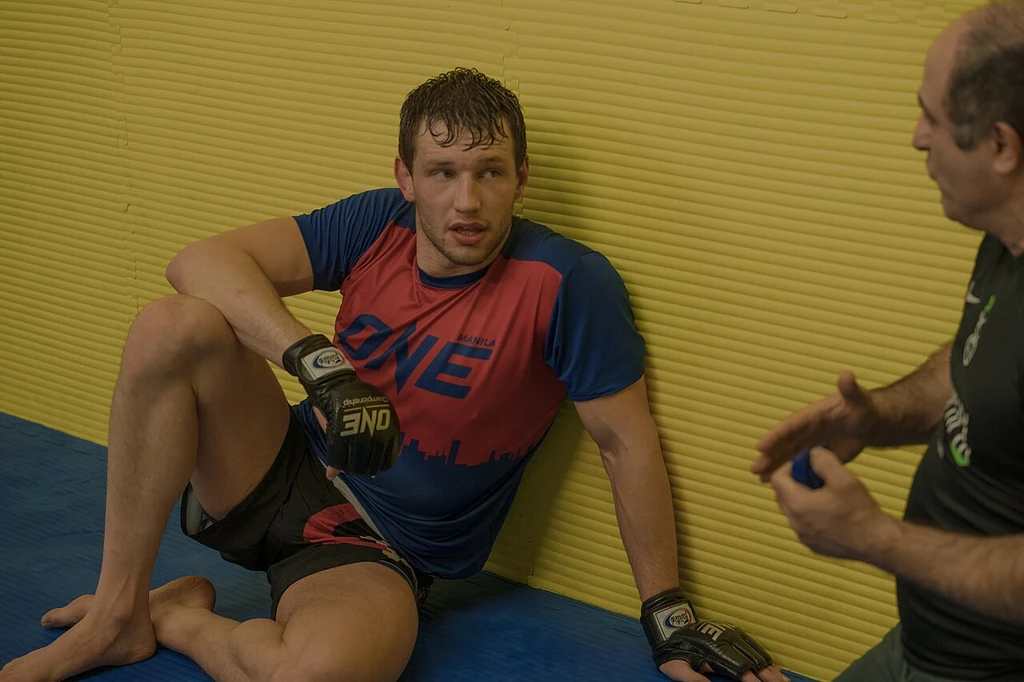 Photo: ReinierdeRidder / CC BY-SA 4.0
One last receipt. Carli Judice showed for $28,000 in Sacramento, doubled it with the win, and then collected a $100,000 award for a first-round finish that took 99 seconds. It was her fourth post-fight check in five UFC fights: she was paid for a Fight of the Night in a debut she lost, then Performance awards in March 2025, at UFC 318 in July, and now this one. At each night's rate that is $250,000 in awards against a disclosed contract that showed at $28,000. The bonus pool is not a bonus for her. It is the salary, and the salary is the tip.